Finding the right candidate in today’s fast-paced Indian job market is tough. Many recruiters just look at resumes, but this often misses the point. To build a top team, companies need a data-driven strategy.
Employment tests let companies see beyond just a resume. They find people with the right skills and fit for your company. This way, you can lower turnover and make your team better.
It’s key to move away from old screening methods to stay ahead. Reliable employment tests give you a clear view of a candidate’s real abilities. This change saves time and makes your hiring fair and effective for your growing team.
Key Takeaways
- Assessments provide a deeper look at candidate skills beyond just a resume.
- Data-driven hiring helps Indian firms reduce costly employee turnover.
- Cultural alignment is just as important as technical ability for long-term success.
- Standardized tools create a more objective and fair recruitment process.
- Modern hiring strategies are essential to remain competitive in today’s market.
Understanding the Role of Employment Tests in Modern Hiring
The way companies in India find new talent is changing. They’re moving from interviews to employment tests for better insights. This change helps HR teams find the right candidates faster and more accurately.

Why Indian Companies Are Adopting Assessment Tools
In India, the job market is very competitive. Hiring the wrong person can cost a lot. By using talent management tools, companies can make sure everyone is judged fairly. This reduces bias and promotes fairness in hiring.
“Data-driven hiring is not just a trend; it is the foundation of building a resilient and high-performing workforce in the modern era.”
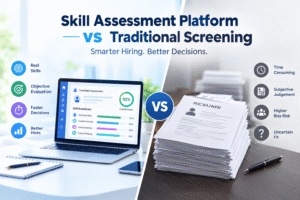
The table below shows how hiring has changed:
| Feature | Traditional Hiring | Modern Assessment |
|---|---|---|
| Decision Basis | Subjective Intuition | Objective Data |
| Candidate Comparison | Inconsistent | Standardized |
| Bias Risk | High | Low |
| Efficiency | Time-Consuming | Streamlined |
Aligning Talent Management Tools with Organizational Goals
It’s key to link talent management tools with the company’s goals for success. When hiring matches the company’s aims, new employees help the business grow. This ensures the team fits the company’s vision and culture.
By focusing on strategic outcomes, companies can turn hiring into a strength. Employment tests help leaders see if candidates fit future needs. This forward-thinking keeps companies competitive in a fast-changing market.
Types of Employee Assessment Methods
Choosing the right talent needs a variety of evaluation methods. By using different employment tests, managers can see a candidate’s true abilities, not just what’s on their CV.
A structured employee assessment plan helps reduce hiring risks. It makes sure every choice is based on facts, not just guesses.

Cognitive Ability Tests for Problem-Solving Skills
Cognitive ability tests check a candidate’s logical thinking and problem-solving skills. These employment tests see how fast someone can learn and solve tough problems.
They’re great for jobs that need lots of analytical thinking. They help find people who can handle fast-paced work well.
Personality Assessments for Cultural Fit
Personality assessments give deep insights into a candidate’s behavior and work style. They help figure out if someone will fit in with the company culture.
When a candidate’s values match the company’s, they tend to stay longer. This employee assessment method looks at:
- Communication style and teamwork.
- Motivation and what drives them.
- How well they adapt to change.
Skill-Based Simulations for Technical Roles
Skill-based simulations let recruiters see a candidate’s technical skills in action. Instead of just saying they can do something, they actually do it.
These simulations work well for technical jobs like coding or data analysis. They show how a candidate handles real challenges, making sure they have the skills needed for the job.
Best Practices for Implementing Testing in Your Recruitment Process
Starting a fair and efficient hiring process begins with smart use of assessment technology. By adding employment tests to your workflow, you get valuable data for better hiring choices. But, how you introduce these steps affects the quality of your candidate experience.
Ensuring Fairness and Reducing Bias in Assessments
To build a diverse workforce, you must actively remove unconscious bias from your evaluation process. Standardized talent management tools offer a consistent metric for all applicants. This ensures every candidate gets a fair chance to show their true abilities.
“Fairness in hiring is not just about the tools you use, but how you apply them to create an inclusive path for every talented individual.”
Balancing Automated Testing with Human Interviews
Technology offers speed, but can’t replace personal conversations. Use automated tests to filter for core competencies. Then, reserve human interviews for evaluating cultural fit and soft skills. This mix ensures your employment tests are a foundation, not the final word.
Setting Clear Benchmarks for Success
Before starting any assessment, define what success means for the role. Clear benchmarks help measure performance accurately and avoid subjective decisions. These talent management tools work best when your team knows which skills are key for the job.
Communicating Expectations to Candidates
Transparency is essential for a positive employer brand during recruitment. Always tell applicants about the tests’ purpose and what they’ll experience. When candidates understand the “why” behind your methods, they feel respected and engaged.
- Provide clear instructions before the test begins.
- Offer practice questions to reduce candidate anxiety.
- Share a realistic timeline for feedback and next steps.
Conclusion
Choosing the right talent is key to your company’s success. A clear employee assessment strategy helps you make smart hiring choices. It finds candidates with the right skills and fit for your company’s culture.
In India, companies use data to build top teams. A consistent assessment process boosts retention and engagement. It also cuts down on hiring mistakes and saves time for your team.
Begin by adding small tests to your workflow. See how new hires perform against your goals. Over time, you can make your hiring process better and more efficient.
Today’s recruitment needs tech and human touch. Use digital tools to stand out in the talent market. A thorough assessment strategy will improve your team’s performance and your company’s health.
FAQ
Why should our organization prioritize employment tests over traditional resume screening?
A resume shows past work, but not future success. Employment tests help companies like Tata Consultancy Services find the right skills and fit. This approach cuts down on turnover and builds a strong team.
How do talent management tools help align new hires with our specific company goals?
Talent management tools give HR at Reliance Industries a fair way to compare candidates. They make sure new hires are strategic, not just a good fit. This aligns with the company’s vision and growth.
What are the primary benefits of including cognitive ability tests in an employee assessment?
Cognitive tests measure problem-solving and learning skills. Infosys uses them to see if candidates can adapt quickly. This ensures your team can handle business challenges.
Can personality assessments truly predict if a candidate will fit our company culture?
Yes! Personality tests reveal a candidate’s work style and values. Google India uses them to see if someone fits their team. This builds a cohesive, high-performing team.
How do skill-based simulations improve the recruitment process for technical roles?
Simulations show a candidate’s skills in real scenarios. At Wipro, you see how they solve problems. This gives a clear view of their abilities.
How can we ensure fairness and reduce bias when using talent management tools?
Use validated talent management tools for fair evaluation. LinkedIn Talent Solutions suggests clear benchmarks. This way, everyone is judged based on their skills and fit.
Is it possible to balance automated testing with a personal, human touch?
Yes! The best hiring at HCLTech mixes automated tests with human interviews. Tests narrow down candidates, then interviews build rapport and expectations.
Written by

Vidhya Chandrasekaran
Co-Founder & COO · iScalePro
Vidhya is the Co-Founder and Chief Operating Officer of iScalePro, helping organizations transform hiring and talent development through AI-powered assessments and data-driven decision-making. With extensive experience in talent acquisition, campus recruitment, and workforce development, she works closely with companies to build efficient, scalable, and skill-focused hiring processes.
Vidhya regularly shares insights on recruitment trends, campus hiring, skills-based hiring, psychometric assessments, and the future of workforce readiness.
- Talent Assessment
- Campus Hiring
- Psychometrics
- Skills-Based Hiring
- Recruitment Technology
- Workforce Development